
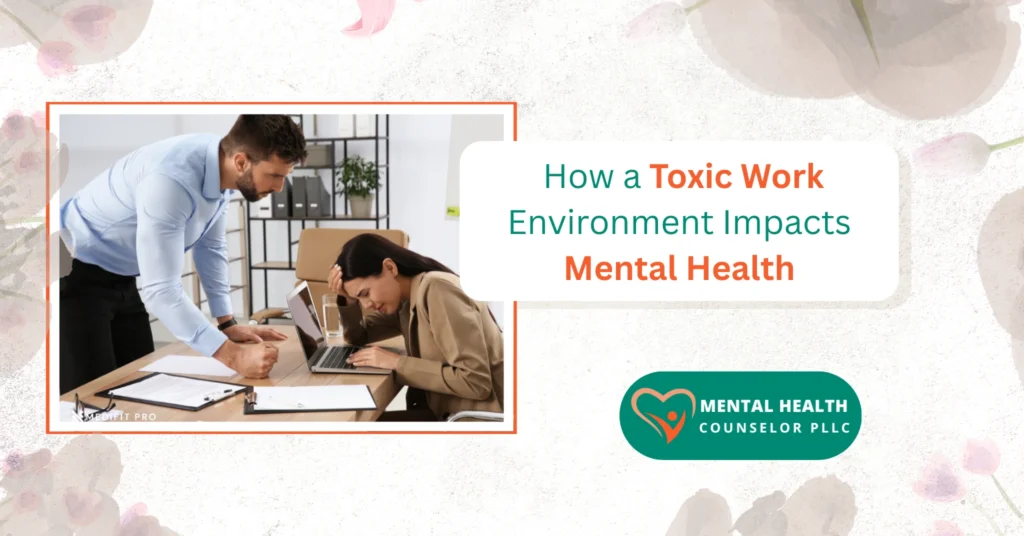
Work is typically expected to have a few challenges that create a stressful atmosphere.
Tight deadlines, lengthy feedback, and long hours; all of this is expected.
However, along with dealing with challenges in a work setting, it is possible to deal with a negative workplace.
Understanding what is considered a toxic work environment matters – a negative workplace is an environment that causes long-lasting harm, both physically and mentally.
What Is A Toxic Workplace?
A toxic working environment manifests in many different forms.
Sometimes it can be a manager who continually disvalues your confidence.
It’s an environment where no one respects your personal space, a team setting where nothing but gossip is present.
These are some of the most common bad company culture examples – and psychological violence, such as bullying, gaslighting, and intimidation, is the most concerning of all violent acts.
None of these issues is trivial. They all worsen as time passes.
The Psychological Toll: What’s Happening in Your Mind and Body
Chronic Stress and the HPA Axis
If you remain in threatening situations on a regular basis, the hypothalamic-pituitary-adrenal (HPA) axis system remains on overdrive.
This means that the system releases cortisol, a powerful stress hormone, repeatedly. Eventually, the stress response system becomes maladaptive.
This is more involved than just feeling “burned out.” It is a change in your physiology that impacts your sleep, immune system, and ability to think clearly.
Anxiety and Hypervigilance
An unpredictable and hostile work environment leads your nervous system to remain alert.
This is associated with hypervigilance.
Hypervigilance is a psychological state defined by the heightened tendency to search for threat stimuli and potential dangers.
As a byproduct, you may have difficulty relaxing, concentrating, or “switching off” and disengaging from work activities.
Depression and Learned Helplessness
The inability to gain control over outcomes, particularly those that are negative, can lead to an individual developing learned helplessness.
One instance where learned helplessness may be exhibited in a usually hostile work environment is in an individual having a chronic depressive mood, or an individual may experience anhedonia, withdrawal, and a lack of interest and motivation.
An individual may also create a negative perception of himself, and in turn, experience self-efficacy.
Occupational Burnout
The World Health Organization has described burnout in the workplace as a three-dimensional phenomenon, inclusive of emotional exhaustion, depersonalization, and an individual experiencing a feeling of a lack of accomplishment or achievement.
One of the leading causes of occupational burnout is toxic workplace environments. Burnout is different from typical fatigue; a weekend off will not fix burnout.
Why People Stay (And Why That’s Not a Character Flaw)
It may seem like an individual can just quit, but the situation can be much more complicated, as there is usually a financial burden, a fear of career backlash, an investment bias, and even an individual failing to realize that the experience is toxic.
Poor leadership and bad work ethic examples come from the top – like normalizing overwork or dismissing concerns – make it even harder to recognize the harm being done.
An environment that reinforces doubt, coupled with a toxic surrounding, will sabotage the individual’s self-trust and make it increasingly difficult to trust one’s perception.
The type of dismissal that tells you your reaction is “too sensitive” or “too unprofessional” is an example of psychological harm.
Examples of Mental Health Deterioration Caused By Work
Knowing the signs your job is making you depressed is a critical first step. You do not need to wait to be in a state of crisis to seek help. If you experience any of the following:
- Work related anxiety or a predominantly low mood
- Symptoms such as head pain, poor sleep or unexplained fatigue
- An emotional state characterized by numbness or cynicism
- Diminished self-advocacy or difficulty with boundary setting
Talking to a mental health professional can be beneficial.
Managing and Changing a Toxic Work Environment
Managing toxic work environments is not solely the responsibility of individuals – organizations play a major role too.
Understanding how to change a toxic work environment starts with awareness:
- Identifying dysfunctional patterns
- Addressing leadership behavior
- Fostering psychological safety
How to change a negative culture in the workplace requires consistent effort, accountability at every level, and a genuine commitment to employee well-being.
Changing toxic work culture is possible. It takes both structural changes and individual courage to speak up.
Obtain Assistance
You have a right to work at a place that is considerate of your mental health.
If a hostile work environment has been negatively affecting your mental health, you can speak to one of our licensed counselors at MentalHealthCounselor.net.
Book a Confidential Session Today
FAQ
Can PTSD be caused by a toxic workplace?
Yes. Bullying, workplace harassment and severe emotional abuse can lead to PTSD and a diagnosis of PTSD as a result of one’s occupation (occupational PTSD).
What is the recovery time for burnout caused by a job?
Recovery time can vary because each individual may experience very different effects.
Mild burnout can be recovered from within a matter of several weeks after rest and the imposition of boundaries.
However, severely burned-out individuals may take considerably longer to recover especially in cases of anxiety or depression.
It is true to state that aid from a trained professional can result in recovery being considerably less time-consuming.