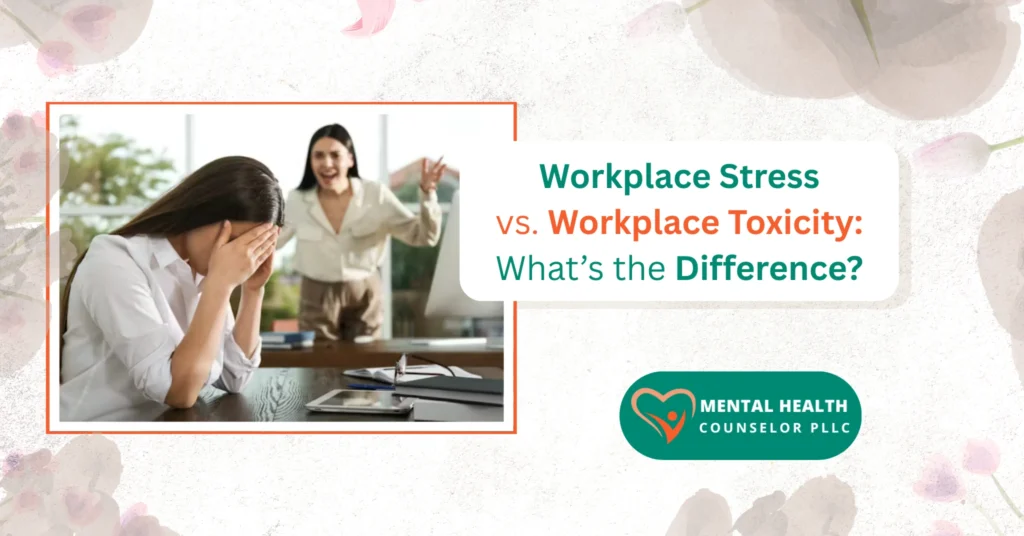
Workplace Stress vs. Workplace Toxicity: What’s the Difference?
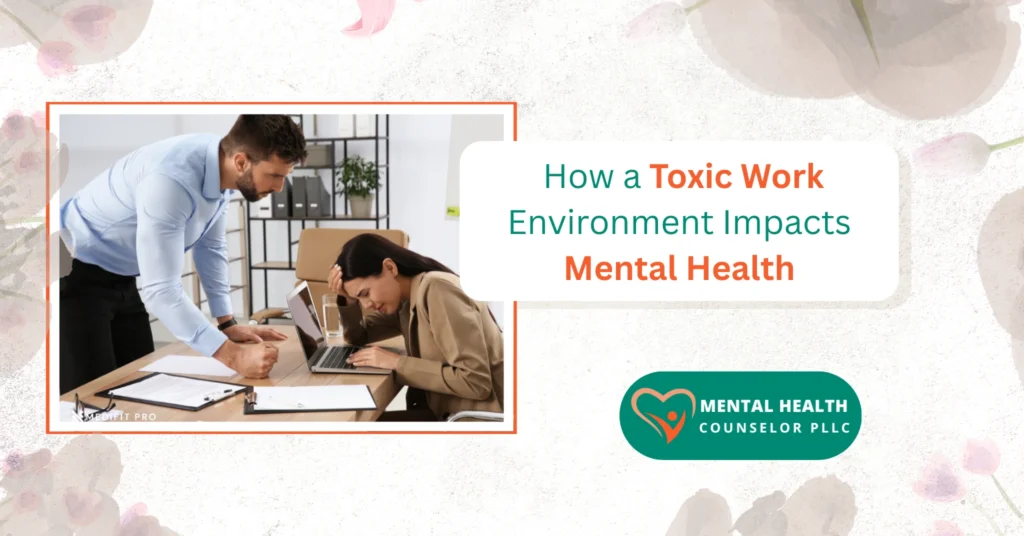
When you have a busy week, you have to deal with deadlines, a swarm of emails, and by the time the week is over, you just may want to give up.This is stressful. However, is it toxic? Not most of the time. What Is the Difference Between Stress and Toxicity? The feeling of stress is often associated with an event or situation that is causing a large amount of work or responsibility.The feeling of stress causes a person to respond in a plethoria of ways.From an hypothalamic-pituitary-adrenal axis perspective, stress is about how cortisol, a causing hormone of stress, is released.Stress can be managed.Stress is caused by: Most importantly, stress is generally situational and time-limited. You usually feel like yourself again after the stressor is resolved. Your nervous system resets. When Does Stress Become a Problem? Chronic stress is different than short-term stress.When stress is never ending, it can cross over into allostatic overload, meaning your body and mind have sustained so much cumulative damage, they begin to do serious harm.This can include cognitive fatigue and difficulty, irritability, headaches and other disrupted sleep symptoms.Chronic stress is not to be confused with toxic stress – and it is certainly not the same as navigating a toxic workplace environment. What’s a Toxic Workplace? Toxic workplaces are not only stressful, but also psychologically dangerous.Its primary distinguishing factor is a steady phenomenon of self-destructive relational and organizational patterns that erode dignity, safety, and self worth at the workplace.The first step to self-protection is knowing the signs of a toxic workplace. Signs of a Toxic Workplace to Be Aware of Toxic workplace behaviors and toxic workplace culture can show up in many forms. Some of the most common toxic behavior in the workplace includes: These are not just bad company culture examples – they are patterns that do real psychological harm.The effect of a toxic work environment reaches further than just stress.A toxic working environment left unaddressed rarely improves on its own. The Biggest Difference Stress challenges you. Toxicity diminishes you. There is a big difference between stress and toxicity. If you leave and feel tired but still feel valued, you dealt with stress. If you feel humiliated, anxious to talk to people, or worried about being attacked, then you are dealing with something much worse. How to Respond to Each Once you identify the situation, your way forward will be much clearer. Managing Stress at Work For stress, it is important to: Surviving and Leaving a Toxic Workplace For workplace toxicity, knowing how to survive a toxic workplace – and when leaving a toxic workplace becomes necessary – is critical. This means: Get Support Today Sleep, relationships, and your sense of self are all things worth discussing with a mentalAt Mental Health Counselor PLLC, we are equipped with a team of licensed professional mental health counselors who are well versed in dealing with: Mental Health Counselor PLLC provides online therapy and face-to-face therapy. Book your appointment online. FAQs Is work-related stress a mental illness? Yes. Stress over extended periods of time may also lead to mental illnesses such as anxiety, depression, and burnout. Earlier assistance can contribute positively. How should I know whether work concerns have moved beyond the boundary, and I require therapy? When you have had sleep troubles, worry, and a sense of setback constantly, and it is affecting your life for over two weeks, then you need to see a therapist. Is it possible to experience toxic work environment and stress at the same time? Yes. Having a workload that is overwhelming and an unsafe psychological environment is not uncommon. This can be figured out with the help of therapy.
Workplace Stress vs. Workplace Toxicity: What’s the Difference? Read More »