Mental Health

Author name: admin

Dating While Healing: Is It Too Soon or Exactly What You Need?

Dating While Healing: Is It Too Soon or Exactly What You Need?

Breakups hurt. They make you ask yourself too many questions and one of them is whether you want to start dating again.There are those people who fear that it is too early, and they will only end up being hurt. Some believe that a new individual could probably assist them in moving on.Both sides make sense. There’s no simple yes or no answer.Healing doesn’t follow a schedule. One day you feel fine, the next you’re back to feeling low. It resembles like the stages of grief.You have to work through: It is more about being attentive to your emotional state and not about time elapsed. Emotional Availability After Heartbreak Emotional availability involves establishing a safe connection with a new person to a point that the past trauma or anxious-avoidant cycles do not necessarily intrude and dominate the relationship.A majority of people, right after a breakup, go into protective mode. That is expected to be a normal defense mechanism. The brain is merely attempting to avoid additional pain.When you are still down in a rumination about your ex, visiting their profiles, and experiencing severe distress about conflicts with them, you are probably not ready to be emotionally available.However, when thoughts have become less emotionally charged and are more neutral, it is evidence of progress in working through the loss. Signs It Might Be Too Soon Rushing into dating is sometimes pleasant but it usually backfires. The following are some of the signals that it is unlikely the right time: Those things normally imply that there is unresolved grief or disorganized attachment to work through. The Markers That You Are Ready On the other hand, starting to date when you’re in a better place can rebuild self-esteem and reinforce secure relating. Watch for these signs: Research in the field of attachment theory shows that people who wait until they are more secure actually end up developing healthier relationships.A relationship based on mutual respect and emotional attunement can even support post-traumatic growth after heartbreak. Dating Mindfully While Healing If you do decide to date, take it easy. Keep things simple at the start: Treatment, particularly such methods as cognitive behavioral therapy or attachment-oriented therapy, can go a long way. It assists in recognizing maladaptive habits and developing more emotional strength. Finding the Balance Finally, dating during healing can be a successful experience provided that you are engaging in self-awareness and emotional honesty.It has the power to introduce some fun and hope.However, when it seems like pressure or avoidance, then it is okay to wait. Trust your internal cues.Attachment rupture requires time to heal, and better relationships are made when you are not trying so hard.Ready to work through this with some support?At Mental Health Counselor PLLC, we help people navigate breakups, heartbreak, and new relationships with therapy. Sessions are available in person or online. Contact us for an initial consultation and get some clarity. FAQs How long should I wait after a breakup to date? It varies for everyone. Go by your emotional availability, not the calendar. Can dating help me heal faster? Sometimes yes, if you’re mindful and regulated. Rushing usually leads to more dysregulation. What if I’m scared of getting hurt again? That’s common after an attachment injury. Therapy can help rebuild secure trust. Is it okay to talk about my ex on early dates? A quick mention is fine, but don’t let it dominate to avoid emotional flooding for both of you.

Dating While Healing: Is It Too Soon or Exactly What You Need? Read More »

Does Relationship Therapy Work?

Does Relationship Therapy Work?

Couples may find themselves at a point of recurring arguments or the distance changes, and they are uncertain whether professional help would really count.Based on what has been learned through research and what happens during actual sessions, it tends to make a difference, primarily when both individuals show up with the intention of doing some work. What Is Relationship Therapy? So, what is relationship therapy? It provides an organized space. A space where couples can discuss the challenges with the help of a professional therapist.Commonly known as couples therapy or marriage counseling, it prioritizes: Many seek it amid ongoing strains, yet couples therapy for healthy relationships also reinforces solid foundations to ward off future issues.Seeking support before patterns harden tends to ease the path forward. How Does Couples Therapy Work? Exactly, how does couples therapy work? Sessions usually gather both partners to voice concerns while the therapist steers toward constructive exchange.What happens in couples therapy? In a couples therapy session, conversations may: Therapists pinpoint entrenched loops, like protest-polite withdrawal, and equip couples with methods to alter them.Sessions generally span 60-90 minutes, starting weekly and spacing out as momentum builds.Focus gradually turns from surfacing conflicts to embedding reliable new patterns. Types of Couples Therapy Approaches Various established couples therapy approaches address diverse challenges, with the best therapy for relationship issues matching the couple’s unique circumstances.Leading options include: Therapists commonly integrate features to suit individual cases. How Effective Is Couples Therapy? How successful is couples therapy? Comprehensive reviews highlight robust results.Treated couples commonly surpass 70-80% of untreated ones in satisfaction metrics, yielding effects on par with leading individual treatments.In EFT, analyses point to 70-75% escaping distress, with sustained progress. Broader success relies on mutual involvement, though many realize couples healing through consistent effort.Some couples therapy advice: Intervening prior to deep entrenchment often amplifies results. Benefits of Couples Therapy Benefits of couples therapy touch routine exchanges and enduring strength: Improvements frequently spill into personal well-being, lightening related stress.Exploring possibilities? Therapists at Mental Health Counselor PLLC provide customized and research-supported care. In-person or virtual.Committing to this process opens doors to a deeper partnership. Arrange a session today. FAQs What exactly is relationship therapy? Directed support to boost communication, settle disputes, and nurture stronger ties. Does couples therapy actually work? Substantially, with studies reflecting major satisfaction advances for most involved couples. What goes on during a couples therapy session? Couples review challenges, delve into feelings, and hone fresh ways to relate under guidance. How successful is couples therapy? Approximately 70-80% note substantial distress relief through dedicated participation. How many sessions does couples therapy really involve? 12-20 sessions. Some notice the change earlier, and others continue longer. What if only one partner is interested in therapy? It can still help the willing partner. Results are usually stronger with both involved.

Does Relationship Therapy Work? Read More »

When Needing Reassurance Becomes a Relationship Problem

When Needing Reassurance Becomes a Relationship Problem

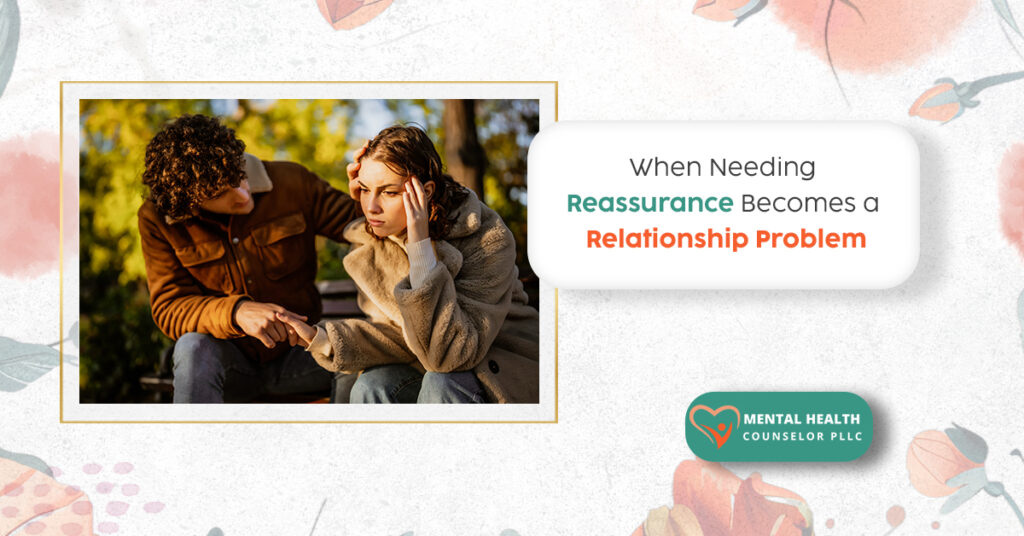
Relationships often involve turning to your partner for emotional steadiness.What does reassurance mean in a relationship? It’s the quiet confirmation that eases doubt and strengthens the bond.Reassurance in a relationship refers to those confirmation words or actions that assure you that you are loved and safe.Nevertheless, when the necessity to find reassurance in the relationship turns into a repeatedly required need, the situation may change.This pattern appears in many forms.Repeated requests for validation can drain both partners over time. What Is Reassurance in Healthy Relationships? What is reassurance at its best? It’s positive reassurance. This can be spontaneous gestures like expressing affection or showing up reliably.Examples of reassurance include saying: Is it ok to ask for reassurance? Absolutely, when it’s occasional.Asking for reassurance in a relationship builds closeness in moderation.The concern starts with excessive reassurance seeking. This is where affirmations are sought repeatedly, even after they’re given. Why Do I Always Need Reassurance? This constant need for validation often traces back to anxious attachment styles. These are formed when early caregiving felt inconsistent. The result is a reliance on external cues to feel safe.Other sources include ongoing anxiety or difficulty tolerating uncertainty. The cycle reinforces itself. Temporary relief leads to more seeking. Signs of Constant Reassurance Seeking in Relationships Constant reassurance can show up subtly. Watch for these patterns: These signs often connect to constant need for reassurance and can signal it’s time to explore the roots. How Excessive Reassurance Seeking Affects Partners Excessive reassurance seeking impacts everyone. The person seeking may feel more insecure as relief fades quickly.The partner providing it can experience fatigue, leading to withdrawal.Secure bonds need balance, but a constant need for reassurance can pull focus toward soothing one person’s fears. This strains the overall connection. How to Deal with Someone Who Needs Constant Reassurance Consistent actions over words can be used as ways to reassure your partner. This will serve to reassure relationship security and not fuel the cycle. How to Stop Seeking Reassurance and Build Self-Security For those recognizing their own patterns, it begins with awareness. Pause before asking. Sit with the discomfort briefly.Here’s how to stop reassurance seeking: Over time, these build lasting internal security. Creating Balanced Reassurance in Relationships Understanding when needing reassurance turns problematic opens the door to change. Partners can talk openly about needs, setting compassionate boundaries together.If the pattern feels entrenched, professional insight into attachment and anxiety can transform things.At mentalhealthcounselor.net, sessions focus on developing secure, mutual connections tailored to your experience.Reach out for a consultation to start building stronger foundations today. FAQs Is it normal to be in a constant need of reassurance? Occasional reassurance is common. Constant reassurance often reflects anxious attachment or unresolved anxiety. What about the person that requires constant reassurance? Combine understanding with encouragement for self-reliance and clear, kind boundaries. Why do I always need reassurance in my relationship? It is often the result of anxious attachment patterns. Can you learn how to stop seeking reassurance? Yes. Through:

When Needing Reassurance Becomes a Relationship Problem Read More »

Understanding the Overthinking–Anxiety Connection

Understanding the Overthinking–Anxiety Connection

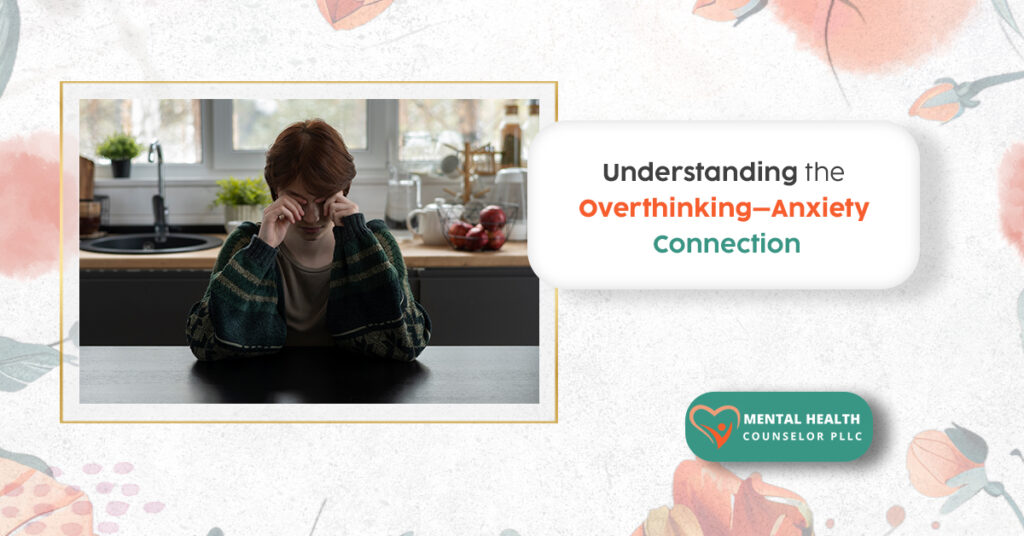
Many people notice thoughts that keep circling. Questions about what happened before. Concerns about what could happen. Uncertainty about the now.These thoughts spiral and are unproductive. The pattern, known as overthinking, commonly occurs with anxiety.At Mental Health Counselor PLLC, New York City, we notice patterns of overthinking and anxiety with many of our clients who come in for psychotherapy.The connection between anxiety and negative thinking requires further examination. Core Processes Overthinking is a type of perseverative cognition. This is the repetitive, negative, and problem-oriented thinking that lacks constructive solutions.Psychologists divide overthinking into two distinct categories. Rumination is a preoccupation with the past. This involves repeatedly thinking about unfavorable outcomes, events, and losses. People often become preoccupied with questions regarding the cause of the losses and what the losses say about their value as a person. This subtype often includes brooding. This is a self-critical style of thinking that is passive and that worsens negative thinking. Worry is an attention problem that is focused on the future. Worry manifests as a series of questions that begin with, “what if…” Worrying about potential dangers and adverse outcomes. In generalized anxiety disorder, excessive worrying is a problem. It is often difficult to stop worrying, and the anxiety often becomes disproportionate to the real-life dangers or consequences. There are several internalizing conditions associated with the process of rumination. The Bidirectional Relationship Anxiety and overthinking are interconnected.Anxiety heightens threat perception. It engages the amygdala and the prefrontal cortex, involved in self-referential thinking. This hypervigilant state locks a person to potential threats and therefore increases worry and rumination. The brain interprets these as problem-solving tasks and preparations.On the other hand, persistent repetitive negative thinking breeds and fortifies anxiety. Over time, this cycle of sympathetic nervous system engagement strengthens anxiety disorder symptoms.Repetitive negative thinking concerns the core of anxiety disorders among studies.Worry is the core component of GAD. In other forms of anxiety, people tend to ruminate about social blunders or bodily sensations.There is a correlation between the level of repetitive negative thinking and anxious apprehension. Underlying Psychological Mechanisms Multiple reasons help explain why overthinking keeps anxiety going. On a brain level, chronic repetitive negative thinking shows altered activity in the default mode network.This network handles self-referential thought. Prolonged activation plus reduced prefrontal regulation keeps the loop active. Impact on Functioning Ongoing overthinking and anxiety interfere with many areas. The pattern feeds itself. Anxiety drives overthinking. Overthinking raises anxiety. Quality of life gradually decreases. Breaking the Pattern Through Awareness Seeing repetitive negative thinking as a process rather than truth marks an important shift.Many clients discover that simply labeling thoughts as “rumination” or “worry” reduces their automatic pull.Evidence-based approaches like rumination-focused cognitive behavioral therapy examine metacognitive beliefs. They build different responses to triggers.Mindfulness practices increase present-moment awareness. They interrupt the move into abstract repetitive thought.Metacognitive therapy targets beliefs about the usefulness of worry or rumination. At Mental Health Counselor PLLC, our licensed psychotherapists offer evidence-based psychotherapy for anxiety and related patterns.We provide in-person and secure video sessions in New York City. We create a supportive setting to address these interconnected experiences.If repetitive negative thinking and anxiety symptoms feel familiar, contact Mental Health Counselor PLLC at 212-696-4717.Our team, including Michael Arnold, specializes in anxiety, cognitive therapy and associated challenges. FAQs What are the similarities between worrying and overthinking? Overthinking comprises rumination, which is about the past, and worry, which is about the future. These are both types of repetitive negative thinking. What is the relationship between rumination and anxiety disorders? Rumination is a factor that increases the likelihood of anxiety and depression. It is not the case that every situation ends in a clinical disorder. Is there the possibility of working through the connection? Cognitive behavioral therapy and metacognitive therapy, for example, demonstrate good outcomes for decreasing the occurrence of negative thinking and associated anxiety symptoms.

Understanding the Overthinking–Anxiety Connection Read More »

Loving Someone with Borderline Personality Disorder

Loving Someone with Borderline Personality Disorder

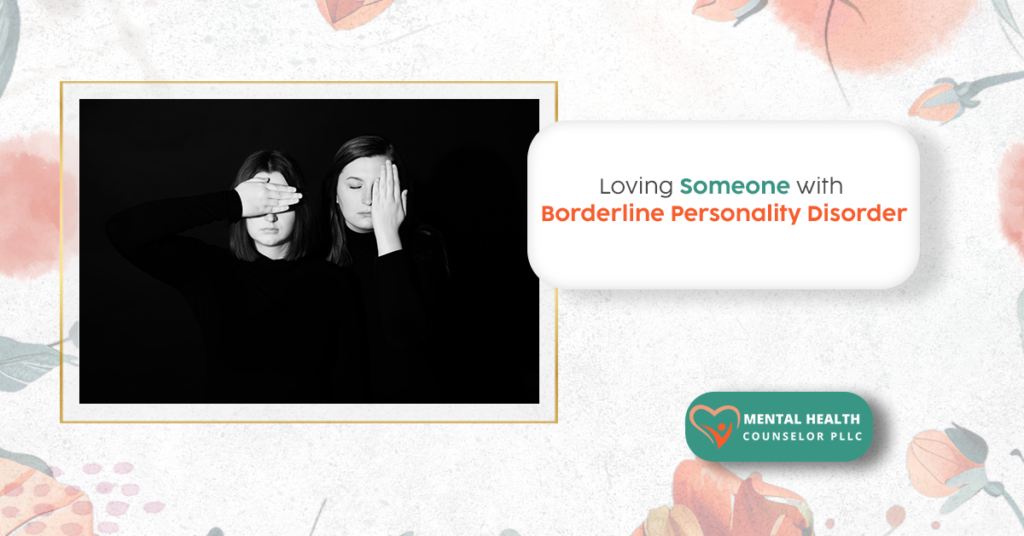
What makes love amazing is its spontaneity. And the fact that we can’t choose whom our hearts fall for is even more exciting. If your loved one suffers from borderline personality disorder (BPD), your journey won’t be easy. It’s really painful to watch those who hold a dear place in your heart struggling with profound inner turmoil, unstable personal identity and deep emotional stress.BPD person can be somewhat chaotic and emotionally draining. While at times you can’t force them to get treatment, there are a couple of things you can do to make your relationship smooth and assist them to lead an almost normal life. Getting acquainted with BPD BPD persons usually experience trouble with relationships, particularly with persons closest to them. Be prepared for wild mood shifts, chronic fear of abandonment, angry outbursts, irrational and impulsive behaviors that can leave you feeling off-balance, helpless, abused or unappreciated.Their illness can distort their perceptions, raise antagonistic behaviors and to the worst extent, make their surrounding a perilous existence. Even if you’re the drama loving type, the fact that there can never be a prolonged moment of calmness might make you think about making a U-turn. Surviving the drama With a borderline, it’s almost impossible to know what to expect. When in their elevated spirits, you become their treasured princess or prince, bastard or a god. If you happen to be around when they’re down, all their nefarious feelings are projected onto you. They can turn out to be cruel and spit ugly words unto you, or give you the unending silent treatment.At times they can also use manipulative tactics that are detrimental to your esteem. Compared to bipolar disorder, they experience quick mood shifts, that can last a short time, and are often not far from their normal self. Whatever you see or experience is their new normal at that moment.Surviving their drama means creating firm boundaries, managing your reactions, and enhancing communication with them. There is no wonder working cure for their condition, except through proper support, treatment and understanding. The dependency A BPD person’s brain seems to magnify whatever their perceptions put in front of them. Their experiences, present or past, including their previous unstable relationships or work history, can project a reflection of self-shame, coupled with sudden changes to an extent that they no longer feel the need to be in existence.And these changes can even worsen if they are left alone. As such they’re highly dependent on their partners. They may frequently seek advice or guidance from various people on the same subject in a single day.Their reaction to fear of abandonment is usually accompanied by being clingy or needy. This can also be alternated with fury reflecting their skewed reality. Helping a BPD loved one It’s very easy to get caught in your efforts to perform heroic acts to please a BPD person. At times, you might find yourself putting a lot of energy into them while jeopardizing your own emotional stability. This is a sure recipe for experiencing depression, resentment, emotional stress, and to the worst extent physical illness.When overwhelmed, it becomes almost impossible to enjoy a sustainable relationship or even help the person in the first place. The only best strategy to help them is to first “have your oxygen mask strapped on”. Check out the following do’s and don’ts of dealing with a BPD loved one. Don’t be tempted to self-isolate After a dreadful experience with your BPD loved one, don’t fall prey to the temptation to stay alone. Keep in touch with your family and friends who understand you and make you feel better. At this critical moment, a shoulder to lean on goes a long way. Get yourself a life! Dating or caring for a BPD person doesn’t mean that life enjoyment for you has come to an end. Get yourself a life beyond your relationship. Don’t yield to the sense of guilt when you spare some time for your own enjoyment. Some time out gives you an open mindset. In fact, both of you will enjoy the improved perspective when you get in touch again. Put your physical health on watch When caught up with the drama of a BPD relationship, it’s very easy to forget about your physical health. Always take care of yourself; eat healthfully, get some quality sleep, and do physical exercise. This pitfall of self-neglect is one that you wouldn’t want to fall into. When you take care of yourself, you’re far much better positioned at handling your relationship stresses, controlling your behavior and emotions amid the challenges forwarded to you by your BPD loved one. Make stress management your cup of tea A BPD person’s behavior can be intensified by your reactions. Being upset or anxious in response to a problematic behavior can trigger them to do or become what you hadn’t expected. Take lots of lessons on stress management and practice with sensory input. This way, you can relieve your stress as it pops up and remain calm even when the pressure intensifies. Communicating with a BPD person Just like any other relationship, communication is a key ingredient for the relationship’s stability and healthy existence. But communicating with BPD persons is a tough ordeal. It’s worth noting that a borderline may have trouble reading accurate body language or understanding non-verbal cues. Their words can be irrational, unfair or cruel. Fear of abandonment might push them to react unnecessarily to triggers regardless of how minute they are. Their aggression can lead them to be impulsive with rage, become abusive or violent.Always establish when to start a conversation with them. If they’re in their raging behavior, that’s definitely not the time to chat with them. When they’re calm: Be an active and empathetic listener Put distractions at bay. TV’s, mobile phones, PCs or anything else shouldn’t take up your focus at this time. Don’t make your concerns the center of the conversation. Withhold criticism and judgement. Make emotions your focus, not words BPD persons require constant validation

Loving Someone with Borderline Personality Disorder Read More »

The Struggle of depression

The Struggle of depression

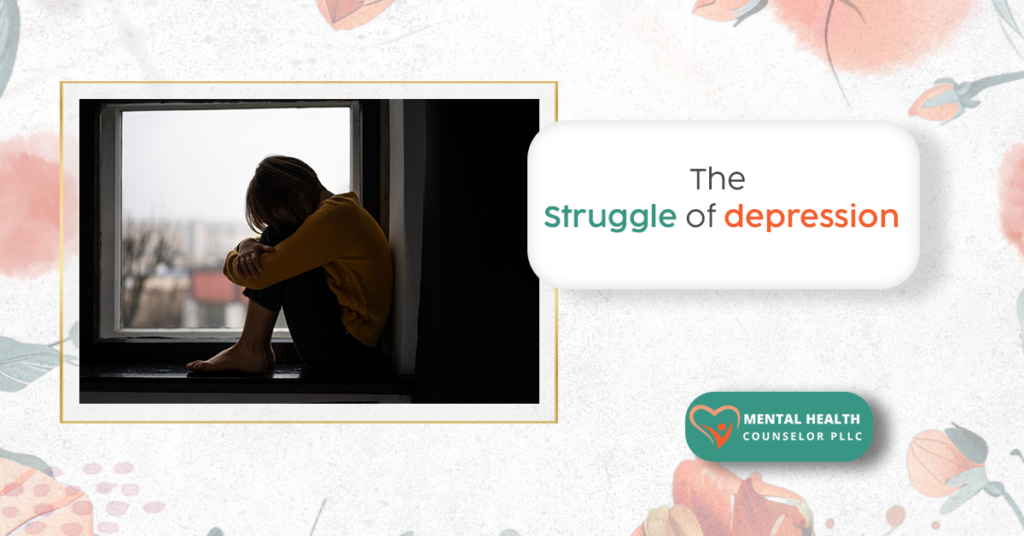
Do you feel like the world is caving in, you are living in a fog, everything that used to excite you is now dull, and you lack the motivation to do the simplest things like getting out of bed, taking a shower, or going for a walk? You could be suffering from depression. According to the World Health Organization, there are over 264 million people battling depression globally. Depression comes with many detrimental effects, such as contributing to other health complications like heart problems. A 2015 publication in the American Journal of Hypertension revealed that one out of five people suffering from coronary heart disease or heart failure also has depression. This disorder can take more from you than you can imagine. It deprives you of your social life and your urge to achieve. And a human being without ambition can feel like moving around like an empty vessel. If you’ve set your mind to overcome depression, you can’t just snap out of it. What is Depression? Depression is an emotional disorder that adversely affects a person’s feelings, thoughts, coming in as grief, loss, anger, and sadness. Fortunately, it’s a treatable condition. If well managed, it can disappear, letting a person lead an everyday happy existence. This disorder doesn’t discriminate; it can affect both adults and youngsters. At its worst, it can lead to someone hurting themselves. The WHO reports that suicide ranks second among the leading causes of 15 to 29 years old deaths. If you’re suffering from depression, oftentimes you’ll encounter feelings of deep aloneness. It can also create various other emotional and physical reactions that affect your life in all of your relationships. Overcoming Depression Making the first step in overcoming depression is always challenging. The disorder causes you to avoid everything, including those activities that can help you recover. For this reason, fighting it on your own might be more challenging than if you got assistance from a professional in helping you deal with your depression. The following are helpful tips that can help you cope with depression and overcome it even as you may continue to take recommended medication like antidepressants and professional therapy. Find a strong support system Seeking a support system is the first and most crucial step to fighting depression. Your support system could be socializing with family and friends, taking part in voluntary community service, or helping the less fortunate. Whatever works best for you, take it up wholeheartedly and commit yourself to it. A depression support group can also work. It can involve joint meetings in your neighborhood or find one online that best suits your preferences. Reduce or eliminate stress activities Stressful encounters push the body to produce more of the stress hormone cortisol which can help you cope with the situation in the short term. However, it can result in more problems in the long run, which can eventually cause depression. Find ways of reducing stress and helping your mind calm down amidst stressful situations. If it’s relationship difficulties that stress you up, find a way to resolve your issues with your partner or consider moving on. Engage yourself more in activities that bring you joy, fun, and pleasure. It can be challenging to force yourself into fun activities, but pushing yourself into doing them can help relieve your depression. Move back to your past hobbies or sports. Enjoy listening to calming music, taking art lessons, go out with friends. In short, find an activity that pleases you and commit to it. Mind your sleep routine Your moods are greatly affected by your sleeping routines. A study conducted in 2014 revealed that up to 80 percent of those with sleeping disturbances also suffer from depression.Practice a good sleeping routine to help improve the quantity and quality of sleep. Ensure all electronics are off at least an hour before your bedtime. Most importantly, only use your bedroom for sleeping or intimate relations. Remove your television. Avoid taking your work to your bed. Your bedroom should be your retreat. Get More Physical Activity and Sunlight The default activity that the body resorts to during depression are sitting back to do nothing. When depressed, you’ll find it much easier to stay in bed. Exercise is critical in fighting depression; it’s one indispensable weapon in your recovery armory. Physical activity helps you avoid relapse after recovery. Spare at least 30 minutes for exercise every day. It doesn’t have to be intensive. You can start light, such as walking for 20 minutes. Also, get some time to bask in the sun and get fresh air. If you live in a place without a lot of sunshine you can make use of a light therapy lamp. Do more rhythmic exercises such as weight training, martial arts, dancing, and swimming. The results can be tremendous if you pair up with training partners. Eat healthily, stay healthy The foods we eat directly impact how we feel. Take foods that are known to fight depression. A research finding highlighted by a Harvard University publication shows that diets containing lots of vegetables, fruits, low-fat dairy, and reduced animal products reduce depression effectively. Avoid ones that can directly or indirectly affect brain activities and mood, such as alcohol, caffeine, and trans fats. Foods that contain high amounts of chemical preservatives are also part of the category of foods to avoid. Importantly, foods that create cravings, such as baked goods, and sugary snacks, can quickly crash your mood leading to depression. Eat responsibly and at appropriate times. Avoid skipping meals for too long as it can cause you to be tired and irritable. Optimistic Maintain a positive attitude towards life. Accept that there are ups and downs, and it is okay to be on the lower side of things. Avoid negative perspectives towards your daily life experiences. If you can’t change a situation, worrying too much about it won’t make it change. Instead, embrace positive thinking.Depression is a burden to many people’s lives. Identifying it before it develops into a major depressive

The Struggle of depression Read More »

Scroll to Top